
Neon Sign Shop in Vilnius
Neonita turns logos, words, sketches and visual ideas into illuminated signs made for a specific wall, room or commercial setting.
Our neon sign shop is a design and production workshop rather than a store of standard products. Every enquiry begins with its purpose: what the sign should communicate, where it will be seen and how it should relate to the surrounding materials and light. A short phrase for a private interior needs a different scale and visual rhythm from a company logo viewed across a café, shop or office. We use those practical details to guide the design before production begins.
Neonita works with businesses, designers and private clients. You can send finished vector artwork, a wall elevation, a photograph, a hand sketch or simply a description of the result you have in mind. We help organise that information into a workable sign concept, discuss LED neon and traditional glass neon where relevant, and plan the backing, cable position and mounting approach around the actual location.
The workshop uses selected tubes, electrical parts, electrodes, supports and mounting components as parts of complete Neonita signs. We do not sell production components separately. This matters because a transformer, profile, tube or fixing method must be selected as part of the whole design and its operating conditions, not treated as an isolated decorative accessory.
For a broader view of the city, project setting and workshop location, explore our guide to neon signs in Vilnius.
If your concept is based on flexible illuminated profiles and an acrylic backing, read about custom LED neon signs and the choices that shape them.
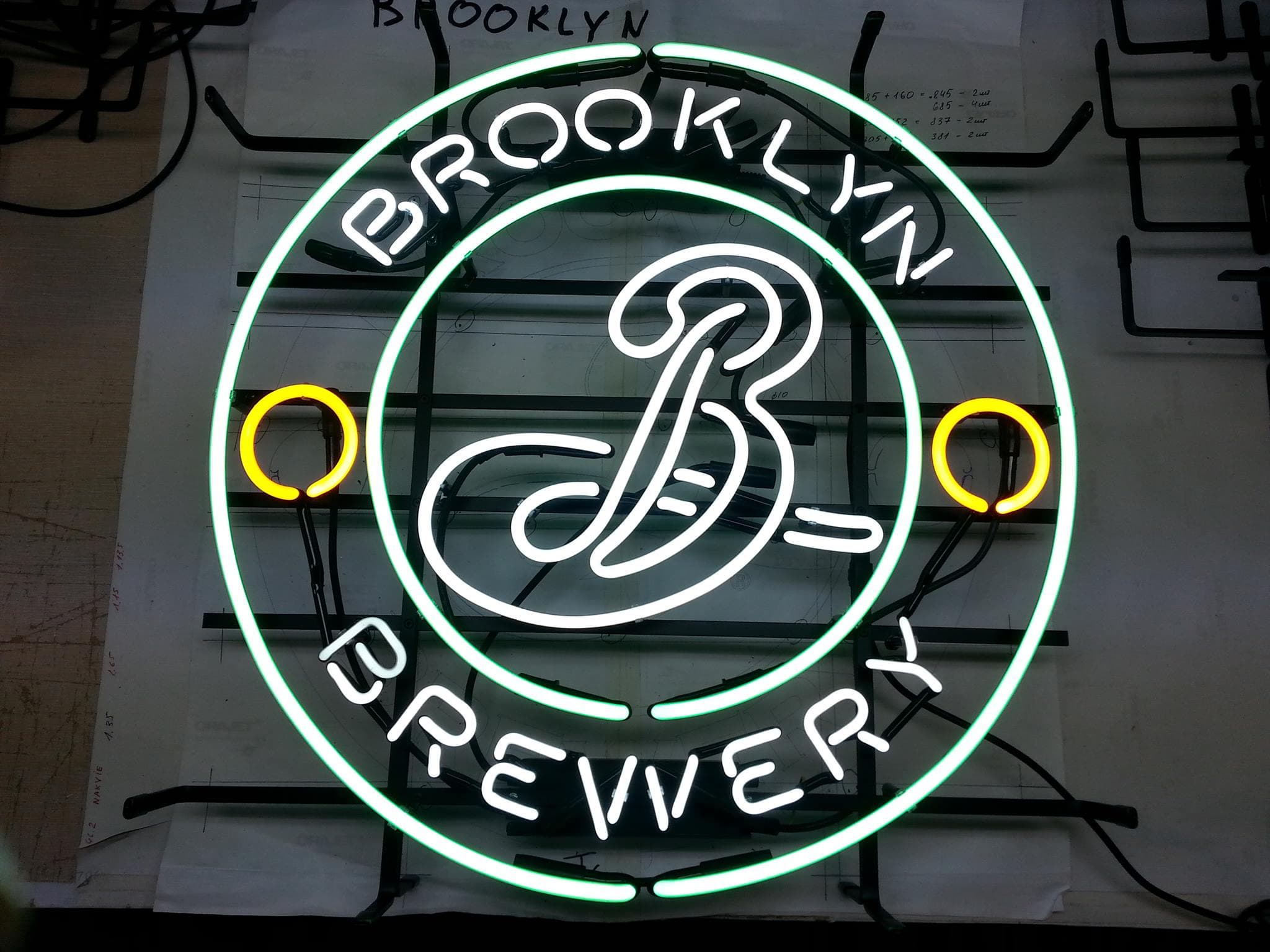
Made around the idea
A custom sign begins with its purpose
A useful brief explains more than the wording. It identifies the main viewing position, approximate wall size, nearby colours, available electrical point and whether the sign will be indoors, sheltered or exposed. These details affect line thickness, spacing, backing shape and how the connection can be kept tidy. They also help us judge whether fine artwork needs to be simplified so that it remains recognisable when illuminated.
We create illuminated logo treatments, names, dates, short messages, symbols, directional graphics and decorative outlines. They can become a focal point behind a counter, identify an office reception, give a shop window a clear visual signature or add atmosphere to a private room. The aim is not simply to make the brightest object possible. A successful sign feels proportionate to the space and remains clear from the distance at which people will normally encounter it.
- Company logos and symbol-and-lettering compositions
- Names, dates and phrases for private spaces or events
- Feature-wall graphics for cafés, bars, shops and offices
- Indoor, sheltered and appropriately specified outdoor signs
From first file to approved direction
Design decisions are resolved before fabrication
A project can start with an AI, EPS, SVG or print-ready PDF logo, but a clean vector file is not mandatory for the first conversation. A photograph and sketch can be enough to discuss scale and intent. We consider the shape of the artwork, the number of colours, the wall material and how cables could travel to a power point. Where a line is too fine or a letter is too compact, we explain why a practical adjustment may improve the finished result.
Before production, the customer should be able to review the wording, dimensions, proportions, colours and planned cable position. This review is especially important for brand artwork, names and dates, because production should follow an agreed visual rather than an assumption. A clear approval stage also gives interior designers and site teams a useful reference for mounting height, power access and surrounding finishes.
Share the setting
Send a straight-on wall photograph, approximate width and height, the main viewing distance and the position of the nearest suitable electrical point. Tell us whether the room is normally bright, dim or used differently through the day.
Review the visual
Check the exact spelling, logo version, proportions and colour direction. If the sign has an acrylic backing, confirm whether it should be transparent or glossy white, rectangular or cut closer to the illuminated form.
Plan the finish
Discuss wall mounting, suspension, spacers, cable routing and access for cleaning or future service. A neat installation is easier to plan before a room is complete than after every finish is fixed.
Two established approaches
LED neon and traditional glass neon serve different ideas
LED neon uses a flexible illuminated profile with a diffuser, commonly arranged on an acrylic backing. It supports lettering, logos, symbols and compact decorative forms, and the current configurator includes a remote-control option for suitable projects. Its relatively light construction can be practical for interiors, events and commercial feature walls, although the backing, electrical parts and weather protection still need to match the real environment.
Traditional glass neon is a specialist craft. We adapt the design to the limits and character of glass, prepare a full-size production pattern and use heat to shape each tube by hand. Electrodes are fitted, and the tubes are processed and filled with neon or an argon-based gas mixture. Gas and tube coating influence the visible colour. The completed electrical assembly is then placed on a test stand so its light, connections and stable operation can be checked.
Neither method is automatically right for every project. LED can be well suited to detailed commercial identity and backed feature pieces, while glass brings the material character of shaped tube work to art, heritage-inspired displays and authentic neon compositions. The decision should follow the design, setting, handling requirements and intended visual effect rather than a generic product comparison.
Designed for real spaces
Business identity, atmosphere and interior focal points
In hospitality, an illuminated sign can mark an entrance, support the mood behind a bar or create a natural point for photographs without overwhelming the rest of the room. In retail, it can reinforce a logo, identify a product area or make a window more recognisable after dark. Offices often need a calmer treatment with accurate brand proportions, controlled brightness and careful cable management around a reception or meeting area.
Private interiors allow a different kind of expression: a name, line drawing, short phrase or meaningful date can become a permanent part of the room. Even then, scale and brightness deserve the same attention as a commercial project. We consider furniture, wall finishes, nearby fixtures and the normal viewing angle so that the sign feels integrated rather than added as an afterthought.
For exterior or exposed positions, the project must be described accurately from the beginning. A sign indoors, one under a canopy and one open to rain and changing conditions require different technical decisions. We specify the complete sign around its actual use and do not assume that an interior construction is suitable outside.
Prepare a useful enquiry
What to send to the workshop
The most helpful enquiry combines the creative idea with a few practical facts. Include the wording or correct logo, a photograph of the intended position, approximate dimensions and any fixed opening or event date. If an interior designer or contractor is involved, wall elevations, material notes and electrical information can prevent avoidable changes later.
You do not need to solve every technical question before contacting us. The purpose of the first exchange is to identify what is known, what needs to be measured and whether LED or glass is the more useful direction to explore. Once the visual and technical details are clear, the project can move toward an individual quotation and production approval.
- Final wording or the correct version of the logo
- Approximate finished width and height
- A photograph from the main viewing position
- Wall material and nearest practical power point
- Indoor, sheltered or exposed placement
- Required date and any installation sequence
Before requesting a quote
Practical questions worth resolving early
Price cannot be determined responsibly from centimetres alone. Size, line complexity, colour count, backing, controls, environmental protection, mounting, delivery and installation planning all affect the proposed solution. Sending artwork, measurements and a location photograph allows a more useful conversation than asking for a generic price for “a neon sign.”
Timing also depends on design approval, revisions, fabrication, testing and delivery. If the sign is needed for an opening or event, state that date in the first enquiry. Exact illuminated colour can differ from print and screens, so projects with brand-critical colour should discuss available options rather than assume a screen sample will reproduce identically in light.
Areas We Serve
Neonita designs and produces custom neon signs from its workshop in Vilnius. The confirmed local focus of this page is Vilnius: its shops, hospitality spaces, offices, public-facing interiors and private homes. If your project involves a site outside the city, describe the location in your enquiry so delivery and any installation requirements can be considered specifically rather than assumed.
Explore neon sign services in VilniusStart with what you have
Send a logo, sketch or wall photograph
Tell us what the sign should say, where it will be installed and roughly how large it should be. Neonita will help organise the next design and technical decisions around the real project.
Contact us